Introduction
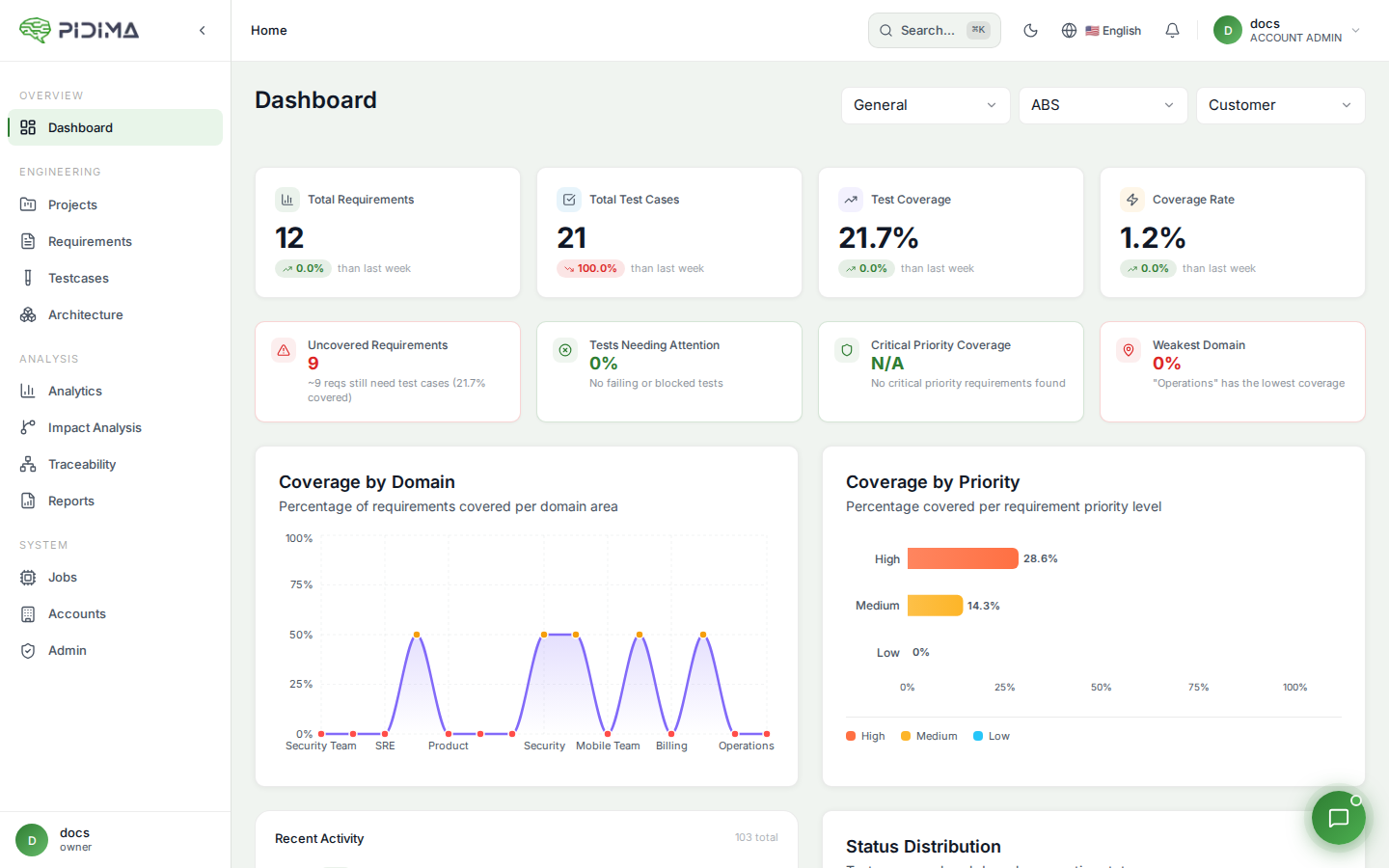
Introduction
Welcome to Pidima — the engineering lifecycle platform for complex and high-assurance products.
What is Pidima?
Pidima is an intelligent engineering platform designed for mission-critical enterprises across:
- 🏭 Engineering Services & Complex-Product Suppliers — Manage requirements across complex supply chains
- 🚀 Aerospace & Space — Aviation systems, satellites, and space systems documentation
- 🛡️ Defense & Autonomous Systems — Mission-critical systems with full traceability
- ⚡ Industrial & Advanced Electronics — Hardware-software integration and verification
- 🏥 MedTech — Medical device development and regulatory compliance
- 🚗 Automotive & Mobility — Vehicle safety and ADAS compliance
In use by Fortune 500 engineering companies.
Why Choose Pidima?
Engineering teams need a connected system for the full lifecycle. Pidima delivers:
- Requirements, Architecture, Verification — All in one connected system
- Complete Traceability — Every artifact linked with full history
- AI Built In — Generate, refine, analyse and check engineering artifacts with AI
- Evidence & Compliance — Audit-ready documentation for regulated industries
Key Features
🤖 AI-Powered Automation
- Generate test specifications from requirements with AI
- Intelligent requirement analysis and enhancement
- Automated compliance checking against your standards
📋 Comprehensive Management
- Requirements engineering and tracking
- Test case generation and management
- Full traceability between requirements, architecture, and tests
🔒 Enterprise-Ready
- Role-based access control
- Multiple deployment options (cloud, on-premises, air-gapped)
- Audit trails and version control
📊 Powerful Reporting
- Real-time dashboards
- Export to PDF, Excel, and more
- Custom compliance reports
Who Uses Pidima?
- Quality Engineers — Streamline test specification creation
- Compliance Officers — Ensure regulatory adherence
- Project Managers — Track progress and coverage
- Development Teams — Integrate lifecycle context into workflows
- Developers — Access requirements through MCP, APIs and Requirements-as-Code